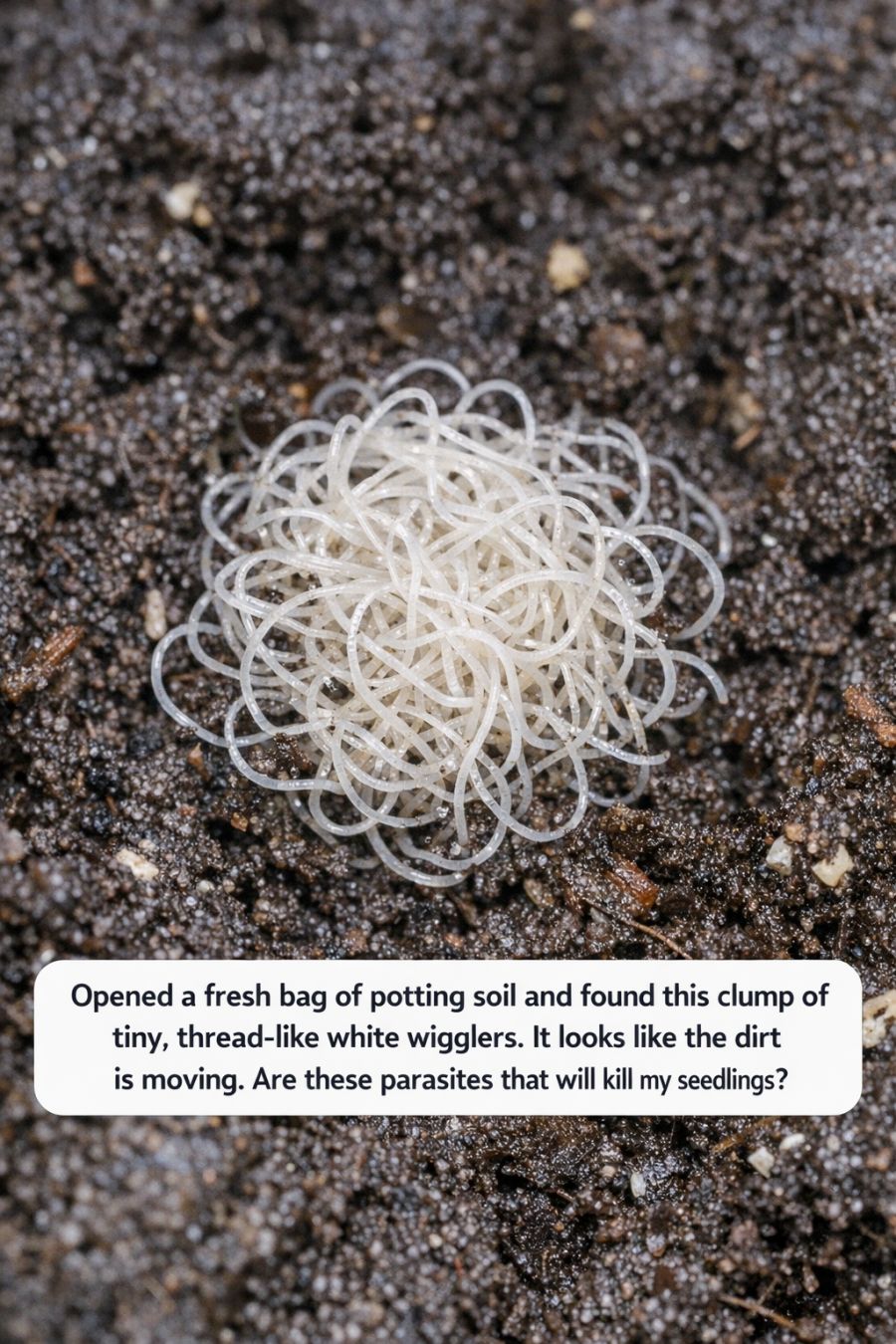

If you’ve ever opened a fresh bag of potting soil only to be met with the unsettling sight of tiny, thread-like white wigglers moving about, you’re not alone. Many gardeners experience this phenomenon and wonder if these creatures are harmful to their plants. The immediate concern is whether these wigglers are parasites that will harm seedlings and potentially ruin your gardening efforts.
Before you panic and dispose of your entire soil supply, it’s important to identify what these little creatures are. In many cases, these tiny organisms are not harmful and may even be beneficial to the soil’s ecosystem. Understanding what these wigglers are, why they’re present, and how they interact with your plants is key to managing them effectively.
1. What Are Those Tiny White Wigglers in Your Potting Soil?
The tiny white wigglers you’re seeing are most likely small soil-dwelling organisms. They can be as small as a few millimeters in length and are often mistaken for worms or larvae due to their shape and movement. These organisms are typically found in moist environments and are a common sight in potting mixes that contain organic matter. While they may look alarming, not all of these wigglers are harmful.
It’s crucial to note that these wigglers can vary significantly in size and type. Some could be beneficial organisms like potworms, while others may be the larvae of insects. Identifying these creatures correctly is the first step in determining whether they pose a threat to your seedlings.
2. Meet Potworms: The Most Likely Culprit Behind the Moving Soil
Potworms, also known as Enchytraeids, are the most common organisms mistaken for harmful pests in potting soil. These small, white worms resemble tiny earthworms and are often found in rich, organic soils. Potworms can grow up to 10 millimeters long and are known for their thread-like appearance. They thrive in moist, decaying organic matter, making potting soil an ideal environment for them.
Unlike harmful parasites, potworms are actually beneficial to your soil. They help decompose organic matter, improving soil structure and nutrient content. Their presence indicates a healthy soil ecosystem, although their numbers can sometimes become overwhelming.
3. How to Tell Potworms Apart From Harmful Soil Parasites
Distinguishing potworms from harmful soil parasites involves close observation. Potworms are tiny, white, and thread-like, with a smooth body and no visible segmentation or legs. In contrast, parasitic larvae, such as those of fungus gnats, may have distinct body segments and a more translucent appearance.
Another way to differentiate them is by their movement. Potworms typically move slowly through the soil, whereas some parasitic larvae might move more erratically or be found in clusters near plant roots. If you’re unsure, using a magnifying glass or consulting with a local gardening expert can provide more clarity.
4. Are Potworms Dangerous to Seedlings, Pets, or People?
Potworms are generally harmless to seedlings, pets, and people. They do not feed on living plant tissue or pose any threat to animals. Instead, they feed on decaying organic matter, helping to break it down into nutrients that plants can absorb. Their presence can even be beneficial to the overall health of the soil.
For pets and humans, potworms are non-toxic and do not carry diseases. They are a natural part of the soil ecosystem and, in small numbers, can contribute to a healthy garden environment by enhancing soil fertility.
5. Why Potworms Suddenly Appear in Fresh Bags of Potting Mix
Potworms can find their way into bags of potting mix because these environments often contain the right combination of moisture, organic material, and air that potworms need to thrive. During the packaging process, potting soil may also pick up potworm eggs, which can hatch under favorable conditions.
Sometimes, potting soil is stored in conditions that help potworms proliferate. If the bags are kept in warm, damp conditions, potworm populations can quickly grow. When you open the bag, the sudden appearance of these creatures can be quite surprising.
6. The Conditions That Make Potworms Thrive in Your Containers
Potworms thrive in conditions that are rich in …..
Read more on the second page below
