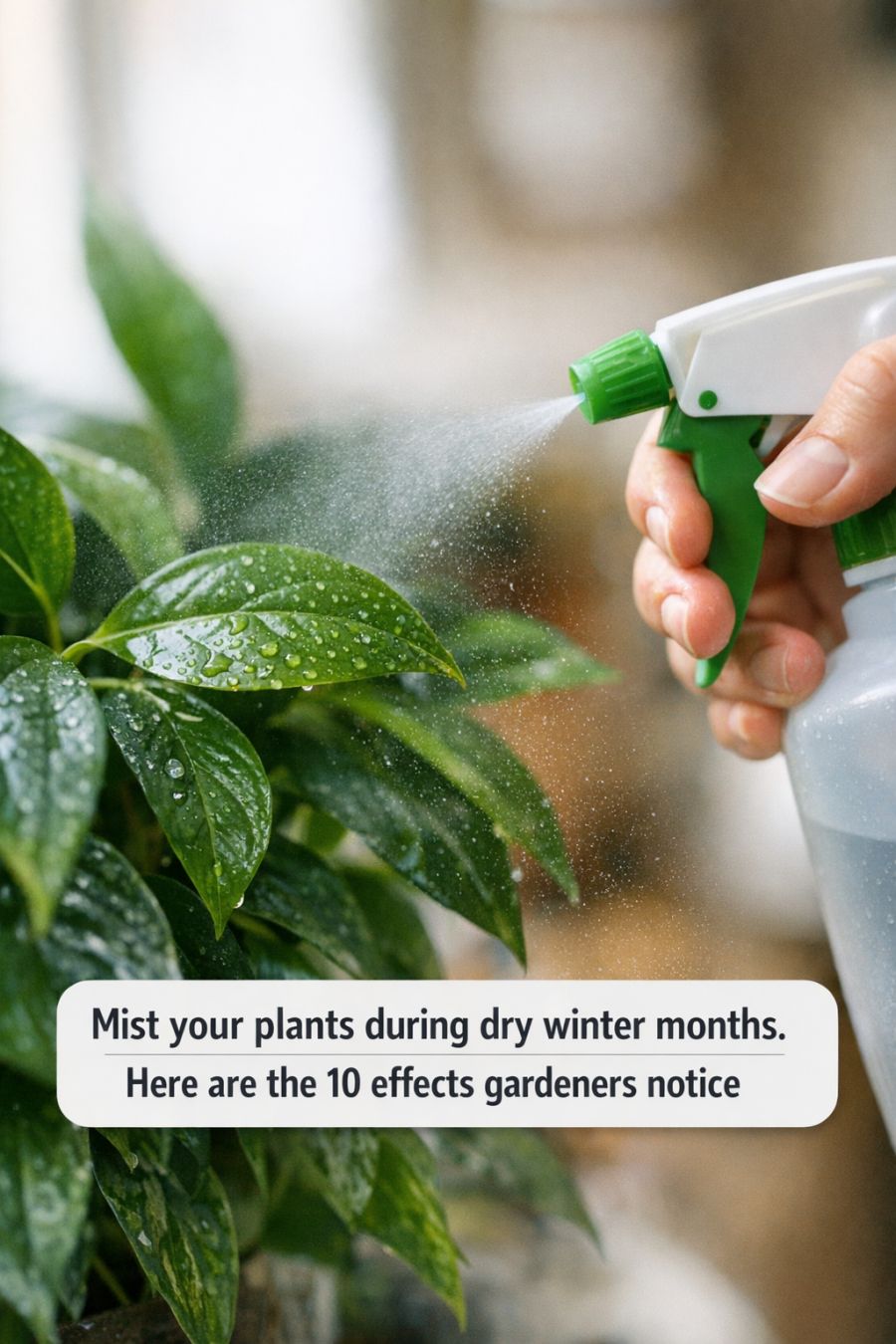
As winter descends, the humidity levels in our homes drop significantly due to indoor heating, making the environment less than ideal for our beloved houseplants. Many plants, especially tropical varieties, thrive in humid conditions, and the dry winter air can lead to several issues that gardeners dread. This is where misting comes in as a simple yet effective solution to maintain plant health and vitality.
By misting your plants during the dry winter months, you can mimic the natural humidity of their native habitats and provide them with a more comfortable growing environment. Misting not only addresses the immediate need for increased humidity but also brings about a host of other benefits that gardeners have observed over the years. Here are ten effects that misting can have on your plants during the chilly season.
1. Leaves Look Fresher and Less Droopy
Misting your plants helps to keep their leaves hydrated, giving them a fresher and more vibrant appearance. When plants lose moisture through their leaves faster than they can absorb it from the soil, they tend to look droopy and sad. By misting, you provide a quick source of moisture that can be absorbed directly through the leaf surfaces, helping them stay perky and healthy.
Many gardeners report that even a light misting once or twice a day can make a noticeable difference in the plant’s appearance. The leaves look more robust and less likely to wilt, which is crucial for maintaining the aesthetic appeal of your indoor garden.
2. Humidity Boost Slows Down Crispy Brown Edges
Dry air is notorious for causing crispy, brown edges on plant leaves, especially in species that are used to more humid environments. Misting can help mitigate this issue by temporarily boosting the humidity around the plant. This increase in moisture levels slows down the process of leaf desiccation, where the edges dry out and turn brown.
Gardeners have observed that consistent misting can significantly reduce the occurrence of these unsightly brown edges, keeping the foliage looking healthy and vibrant. For optimal results, it’s recommended to monitor the relative humidity of your home and aim to keep it between 40-60% for most houseplants.
3. Fewer Spider Mites and Other Dry-Loving Pests
Spider mites and other pests thrive in dry conditions, making your plants more susceptible to infestations during the winter months. Misting creates a less favorable environment for these pests, as they prefer low humidity levels. By increasing the moisture around your plants, you can naturally deter these unwanted visitors.
Regular misting, combined with good air circulation, can help keep spider mite populations in check. Gardeners have noticed that their misted plants suffer fewer pest problems, reducing the need for chemical interventions and keeping their indoor garden healthier overall.
4. Improved Growth in Tropical and Humidity-Loving Plants
Tropical plants, such as ferns, orchids, and philodendrons, are accustomed to high humidity environments. When the air is too dry, it can stunt their growth and lead to other stress-related issues. Misting helps create microclimates that mimic their natural habitats, encouraging better growth.
Gardeners have reported that their tropical plants exhibit improved growth and vitality when misted regularly during the winter months. New leaves emerge more frequently, and the overall plant health is noticeably better compared to those that are not misted.
5. Cleaner, Dust-Free Foliage That Photosynthesizes Better
Dust accumulation on leaves can block sunlight and hinder photosynthesis, which is vital for plant health. Misting helps to wash away dust and debris, keeping the leaves clean and allowing them to photosynthesize more efficiently.
Gardeners often notice that after a good misting, their plants appear more vibrant and seem to ‘perk up’ as they are able to capture more sunlight for energy production. Regular misting can be part of a routine maintenance schedule to ensure your plants remain dust-free and thriving.
6. More Vibrant Color and Glossy Leaf Texture
Plants that are regularly misted tend to develop more vibrant colors and a glossy texture on their leaves. The additional moisture helps to enhance the natural pigmentation, making greens look richer and more vivid.
Gardeners have observed that misted plants often appear healthier and more aesthetically pleasing, with leaves that have a shiny, waxy finish. This enhanced appearance not only makes the plants more attractive but also indicates that they are well-hydrated and receiving adequate care.
7. Reduced Shock From Indoor Heating and Drafts
Indoor heating systems can create temperature fluctuations and drafts that stress plants, leading to leaf drop and other issues. Misting can help buffer these effects by providing a consistent source of moisture that stabilizes the microenvironment around the plant.
Gardeners have found that misting can reduce the shock that plants experience from sudden temperature changes, making them more resilient to the challenges of indoor winter conditions. This can be particularly important for plants located near windows or heating vents.
8. Better Performance of Buds and New Leaf Unfurling
Misting can have a positive impact on the development of buds and the unfurling of new leaves. The added humidity helps to soften the plant tissues, making it easier for buds to break open and leaves to unfurl without damage.
Many gardeners report that their misted plants tend to have more successful flowering and leaf production, with fewer instances of bud drop or malformed leaves. This is especially noticeable in plants that naturally produce delicate new growth, such as orchids and ferns.
9. Subtle Changes in Soil Moisture and Watering Needs
While misting primarily affects the air around the plant, it can also lead to subtle changes in soil moisture levels. The additional humidity can slightly reduce the rate of water evaporation from the soil, potentially altering your plant’s watering needs.
Gardeners should pay attention to how misting affects the soil moisture and adjust their watering schedule accordingly. It might mean less frequent watering is needed, helping to prevent overwatering issues that can arise during the winter months.
10. When Misting Backfires: Mold, Spots, and Stress Signals
While misting offers many benefits, it can also backfire if not done correctly. Excessive moisture on leaves can lead to mold and mildew growth, especially in environments with poor air circulation. Certain plants may also develop spots or stress signals if misted too frequently.
To avoid these issues, gardeners should mist in the morning to allow leaves to dry throughout the day and ensure that the mist is fine enough to avoid water pooling on the foliage. Observing your plants’ reactions and adjusting your misting routine can help maximize the benefits while minimizing potential downsides.
