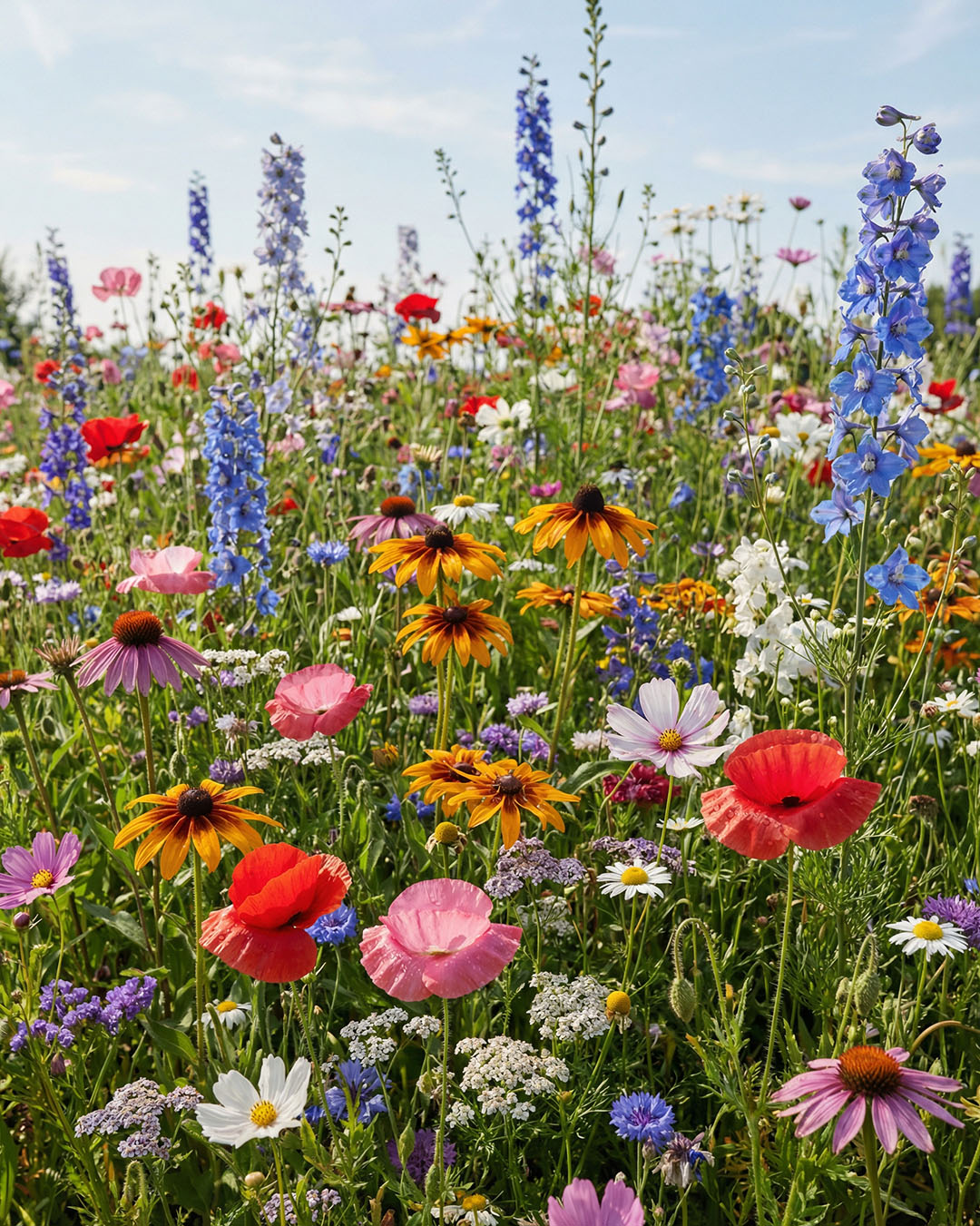
Be honest: Do you actually enjoy mowing the lawn every weekend, or do you just do it because that’s what you’re “supposed” to do?

The “Kill the Grass” Rule
The biggest mistake gardeners make with wildflower meadows is simply throwing seeds onto an existing lawn. This never works because established grass roots are aggressive and will choke out your flowers before they germinate. To succeed, you must start with a blank slate. Rent a sod cutter to strip away the turf or smother the area with cardboard and compost for a season. You need bare, exposed soil to give these seeds the fighting chance they need to establish a root system.
Curating the “Chaos Mix”
To achieve this specific lush, layered look, you cannot rely on a generic hardware store mix. You need a balance of vertical spikes and soft, open blooms. Anchor your meadow with Blue Larkspur (Delphinium), which provides the tall, dramatic spires you see reaching for the sky. Add vibrant pops of color with Red Corn Poppies and golden Black-eyed Susans (Rudbeckia) to create warmth. Soften the visual impact with Pink Coneflowers (Echinacea) and Cosmos, and finally, weave in airy fillers like Queen Anne’s Lace or White Yarrow to connect the gaps. This combination ensures a continuous bloom cycle that shifts colors as the season progresses.
The “Sand Shaker” Technique
Wildflower seeds are often microscopic, making it impossible to spread them evenly by hand. If you just scatter them, you will end up with clumps of flowers and large bare patches. The professional trick is to mix your seed packet with a bucket of builder’s sand. The sand acts as a carrier, bulking up the volume so you can see exactly where you have thrown the mix. Broadcast this sand-seed blend across your bare soil in two passes—one horizontal and one vertical—to guarantee a uniform carpet of blooms.
Walk on Your Work
Once the seeds are down, do not bury them. Most wildflower seeds need exposure to sunlight to trigger germination. Instead of raking them in, simply walk over the entire area. Your body weight presses the seeds firmly into the soil surface, ensuring good contact for moisture absorption without suffocating them. Water the area gently for the first few weeks until the seedlings are a few inches tall, and then put the hose away. A true meadow is drought-tolerant and thrives on neglect.
The “Wait for Spring” Cleanup
While it is tempting to cut everything down in autumn to look “tidy,” the best practice is to leave the dead stalks standing all winter. Hollow stems from plants like Coneflowers and sunflowers serve as winter hotels for hibernating native bees and beneficial insects. Additionally, the dried seed heads provide a crucial food source for birds during the snowiest months. Wait until you see new green shoots emerging at the base in early spring, then mow or weed-whack the old growth down to clear the way for the new season.
