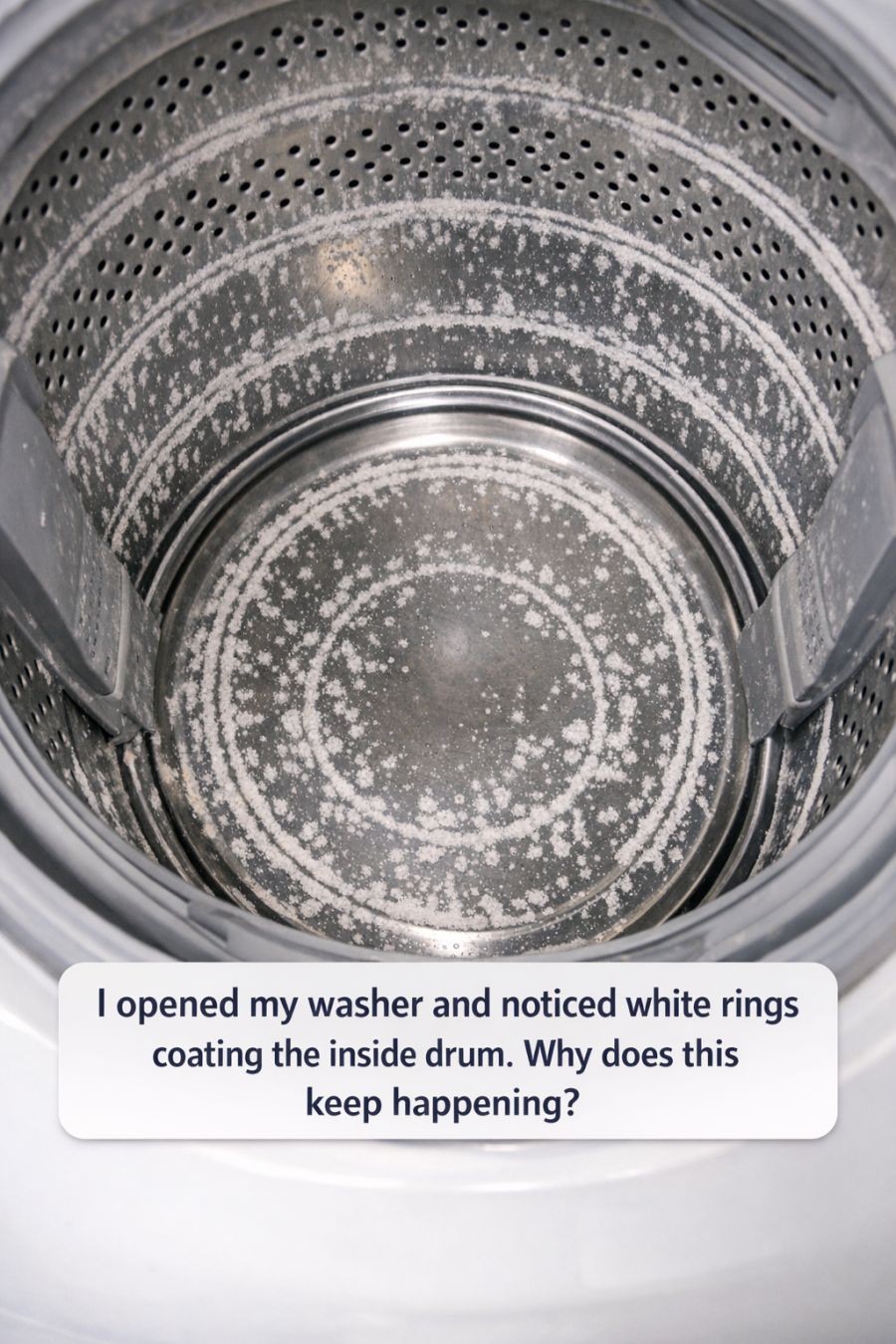
Opening your washing machine to discover mysterious white rings coating the inside drum can be both perplexing and frustrating. This common household issue not only affects the appearance of your washer but can also impact its performance over time. Understanding the causes behind these rings is key to addressing and preventing them.
In this article, we’ll explore the reasons behind the formation of white rings in your washing machine, how different factors contribute to the buildup, and what steps you can take to clean and prevent them. From the role of hard water and detergents to the type of washing machine you own, we’ll cover everything you need to know to keep your washer running smoothly.
1. What Those Mysterious White Rings in Your Washer Actually Are
The white rings you see in your washing machine are typically the result of mineral deposits left behind by hard water. These deposits, primarily composed of calcium and magnesium, can accumulate over time, forming a chalky residue. This buildup is often referred to as limescale and can appear as rings or patches along the drum.
While these deposits are not immediately harmful, they can lead to decreased efficiency in your washing machine. The buildup can affect the machine’s ability to agitate properly and may even lead to mechanical issues if left untreated. Understanding that these rings are a form of mineral scale is the first step in addressing the problem.
2. How Hard Water Minerals Build Up on the Drum Over Time
Hard water contains high levels of dissolved minerals, particularly calcium and magnesium. When you use hard water in your washing machine, the minerals can precipitate out of the water as it heats up and evaporates, leaving behind a residue on the drum. Over time, these deposits accumulate, layer by layer, eventually becoming visible as white rings.
The severity of the buildup depends on the hardness of your water, which can vary based on your geographic location. Water with a hardness level above 120 mg/L is considered hard and is more likely to cause significant mineral scaling in appliances like washing machines.
3. The Role Detergent Plays in Creating Stubborn Mineral Scale
Detergents are formulated to clean by breaking down dirt and grime, but they can also interact with hard water minerals to form a more stubborn scale. Some detergents contain phosphates or other additives that can react with calcium and magnesium, contributing to the formation of insoluble compounds that add to the buildup.
Using the right type of detergent can make a difference. High-efficiency (HE) detergents, for example, are designed to work with less water and are typically better at minimizing residue. However, using too much detergent, even of the HE variety, can exacerbate the problem by leaving excess residue and promoting scale formation.
4. Why Using Too Much Detergent Makes the Problem Worse
It’s a common misconception that more detergent means cleaner clothes. In reality, using too much detergent can lead to excessive sudsing, which reduces the efficiency of the rinse cycle. This leaves behind detergent residues that can combine with hard water minerals to form a solid scale.
Excess detergent also creates an environment where bacteria and mold can thrive, leading to additional buildup. Following the manufacturer’s instructions for detergent usage and adjusting the amount based on load size and soil level can help prevent excessive residue.
5. Residue From Fabric Softeners, Pods, and Additives
Fabric softeners, laundry pods, and other washing additives can also contribute to the formation of white rings. These products often contain oils, waxes, or other substances that can adhere to the drum and trap mineral deposits.
Liquid fabric softeners, in particular, can leave a waxy coating that is difficult to remove. This coating can act as a magnet for mineral deposits, exacerbating the problem. Consider using vinegar as a natural fabric softener alternative, which can help dissolve minerals rather than attract them.
6. How Cold Wash Cycles Can Leave More Gunk Behind
Cold water washes are energy-efficient and suitable for many types of clothing, but they may not dissolve detergents and additives as effectively as hot water washes. This can result in more residue left behind in the drum.
Without the heat to fully dissolve and rinse away detergents and additives, these substances can combine with hard water minerals to form rings. Periodically running a hot water cycle with an empty load can help dissolve and flush out this buildup, maintaining a cleaner drum.
7. Front-Loader vs. Top-Loader: Which Machines Are More Prone to Rings?
Front-loading washing machines are generally more prone to developing white rings than top-loaders. This is because they use less water and rely more on tumbling action, which can lead to greater concentration of minerals and residues on the drum.
Additionally, the door seals in front-loaders can trap moisture, creating a breeding ground for mold and mildew, which can contribute to the appearance of white rings. Regular cleaning of the door seal and running maintenance cycles can help mitigate this issue in front-loading machines.
8. When White Rings Signal Mold, Mildew, or Soap Scum Instead
Not all white rings are caused by mineral deposits. In some cases, they can be a sign of mold, mildew, or soap scum buildup. These are typically more common in front-loading machines where moisture can become trapped.
Mold and mildew often emit a musty odor, so if you notice a smell along with the rings, it’s worth investigating further. Soap scum, on the other hand, tends to feel sticky or greasy. Regular cleaning with a mixture of vinegar and baking soda can help address these issues and keep your machine fresh.
9. Simple At-Home Cleaning Routines to Strip Away Existing Buildup
To remove existing mineral scale and residues, try running an empty hot water cycle with two cups of white vinegar. The acidity of the vinegar helps dissolve mineral deposits and cut through grime. For stubborn buildup, you can also add half a cup of baking soda to the drum to enhance the cleaning power.
After the cycle is complete, wipe down the drum and door seals with a microfiber cloth. For particularly tough spots, a paste of baking soda and water can be applied directly to the buildup and scrubbed with a non-abrasive sponge.
10. Smart Detergent and Water-Softening Tweaks to Prevent Future Rings
Preventing future white rings involves using the right combination of detergent and water softeners. Consider switching to a liquid detergent specifically formulated for hard water, which contains ingredients that help prevent mineral deposits.
Installing a water softener can also make a significant difference by removing calcium and magnesium ions from your water supply. If a whole-house system isn’t feasible, you can use water softening additives directly in the wash to achieve similar effects.
11. When to Call a Pro or Consider Replacing a Scale-Damaged Washer
If your washing machine has significant scale buildup that you can’t remove with at-home methods, it may be time to call a professional. A technician can perform a thorough cleaning and inspect your machine for any damage caused by the buildup.
In extreme cases, where the scale has caused irreversible damage to the drum or other components, replacing the washing machine might be the most cost-effective solution. Regular maintenance and preventive measures can help extend the life of your new appliance.
