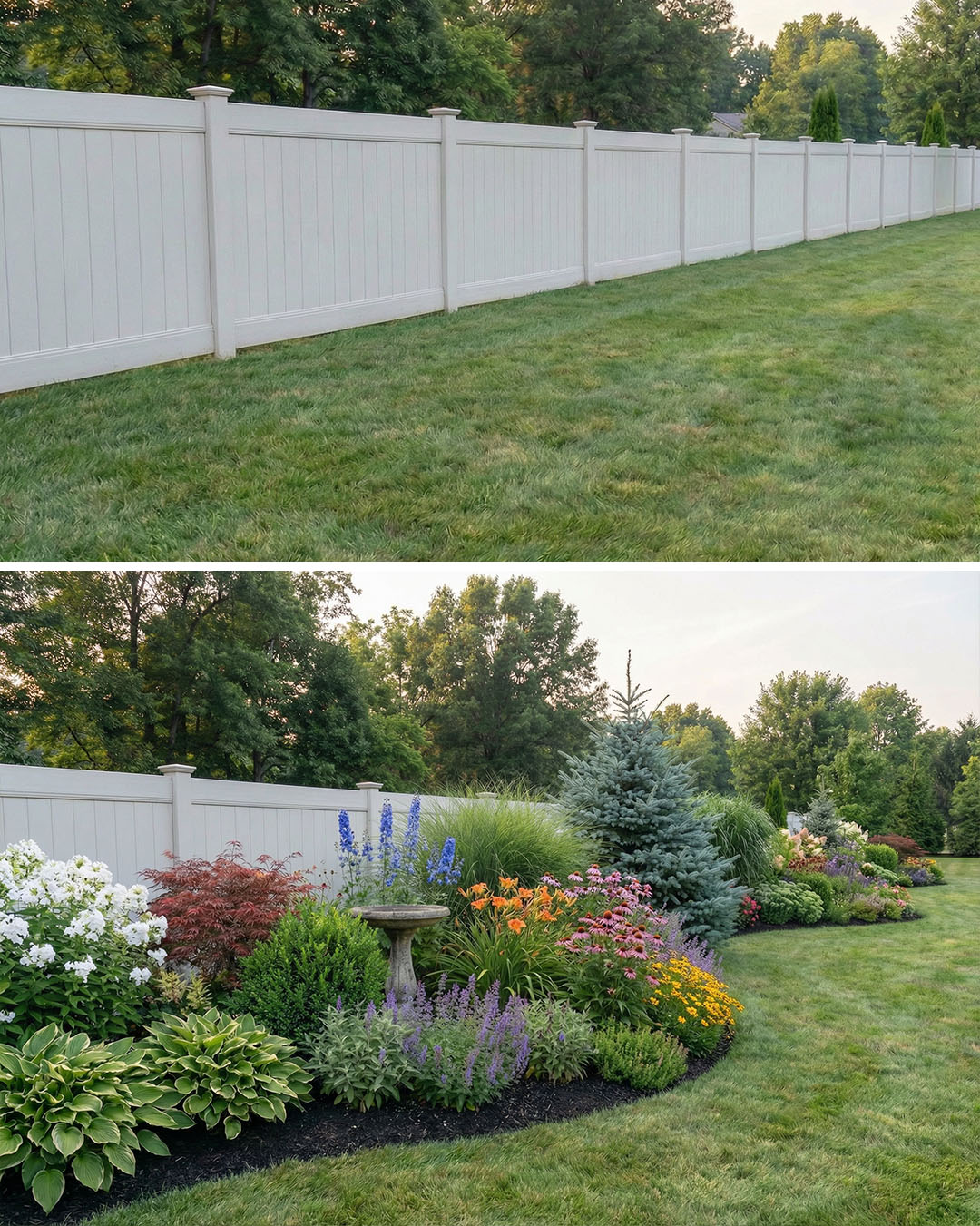
The human eye naturally follows lines. When you dig a garden bed that runs perfectly parallel to a straight fence, you create a visual “fast lane” that rushes the eye straight to the back of the property, making the yard feel smaller and narrower. A curved, serpentine edge does the opposite. It forces the eye to slow down and meander through the landscape, creating an illusion of expanded width and relaxation that rigid rectangles simply cannot achieve.

The “Garden Hose” Layout Technique
To achieve this professional look, do not rely on your intuition or a tape measure. Lay a flexible garden hose out on the grass to define your new border. The goal is to create long, sweeping arcs—think “lazy river,” not “snake wiggles.” A proper curve should be deep enough to make a statement; pull the hose out six to eight feet from the fence at the widest points and narrow it down to three feet at the pinch points to create dynamic rhythm.
Unlock Deep Layering Opportunities
The primary advantage of a curved design is that the “bellies” (the wide parts) of the curve give you enough soil depth to plant in tiers. Unlike a narrow straight bed where plants are forced into a single file line, a deep curve allows you to use the “stadium seating” rule. Place large architectural anchors like Blue Spruce or tall ornamental grasses in the back, mass plantings of Coneflower and Daylilies in the middle, and low-growing Hostas or Salvia in the front row to hide the stems.
Define the Edge with a Spade
For that crisp, high-contrast finish, skip the plastic edging strips which often heave out of the ground after one winter. Instead, use a flat-edged spade or a half-moon edger to cut a vertical “V-trench” along your hose line. This physical separation prevents grass roots from creeping into your mulch and creates a deep shadow line that makes the black soil pop against the green lawn.
