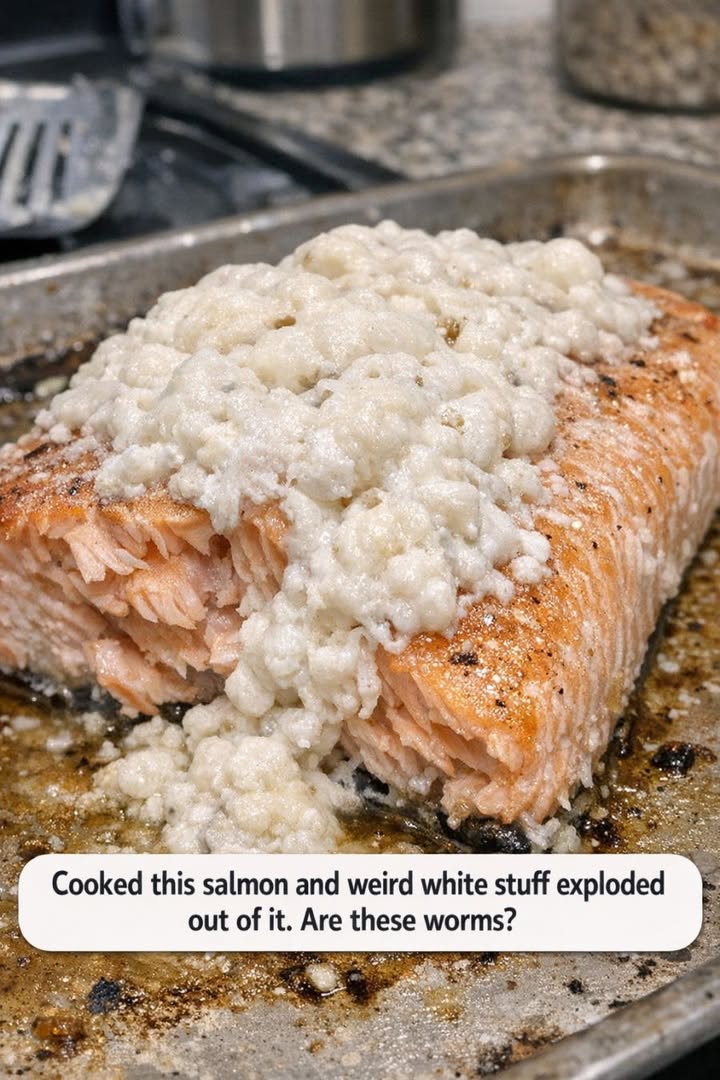
6. Common Cooking Mistakes That Make Albumin Explode Out
One of the most common mistakes that lead to excessive albumin release is cooking the salmon at too high a temperature or for too long. High heat causes the muscle fibers to contract excessively, squeezing out more albumin.
Overcooking is another culprit. Salmon should ideally be cooked until it reaches an internal temperature of 125°F (52°C) for medium-rare. Going beyond this can result in more albumin surfacing, along with a dry texture.
7. Simple Cooking Hacks To Keep Your Salmon Smooth And Pretty
To minimize the appearance of albumin, consider cooking methods that use gentler heat, such as poaching or slow-roasting. These methods help maintain the integrity of the protein and limit albumin release.
Brining the salmon briefly in a solution of water and salt before cooking can also help. This process helps to firm up the fish’s surface, reducing albumin leakage. Aim for a brine time of about 10 minutes before patting the fish dry and proceeding with cooking.
8. Is It Safe To Eat? What Food Scientists And Chefs Say
According to food scientists and culinary experts, the presence of albumin on cooked salmon is entirely safe and does not affect the edibility of the fish. It is a natural occurrence and does not indicate spoilage or contamination.
Chefs often recommend simply wiping off the albumin if its appearance is bothersome, as it does not alter the taste or quality of the salmon. The key is to ensure the fish is fresh and cooked to the proper internal temperature.
9. How To Buy Salmon That’s Less Likely To Ooze White Gunk
When purchasing salmon, opt for fresh, high-quality cuts from reputable sources. Look for salmon with vibrant color, firm flesh, and a sea-like smell. Higher-quality salmon, such as those that are fresher or from specific species like King or Sockeye, may leak less albumin.
Ask your fishmonger about the harvest date and storage conditions to ensure you are getting the freshest possible product. Proper handling from the moment of purchase to cooking is crucial in maintaining the quality of the salmon.
10. What To Do If You Really Did Find Worms In Your Fish
If you find what appears to be worms in your salmon, it is important to take immediate action. Do not consume the fish and contact the retailer or supplier to report the issue. Most suppliers will be willing to refund or replace the product.
Worms in fish are not common in commercially sold seafood, as most suppliers follow strict guidelines for freezing and inspecting fish to eliminate parasites. However, it is always wise to inspect your fish before cooking and eating.
11. The Bottom Line On Salmon, White Stuff, And Food Safety Panic
The appearance of white albumin on cooked salmon is a normal and harmless occurrence, often misunderstood by consumers. It signals nothing more than a reaction of the fish’s natural proteins to heat.
Ensuring your salmon is fresh, properly stored, and cooked with care can help minimize albumin and maintain the dish’s aesthetic appeal. Remember, the key to enjoying salmon is understanding what is normal and what is not, so you can savor this nutritious and delicious fish without worry.
