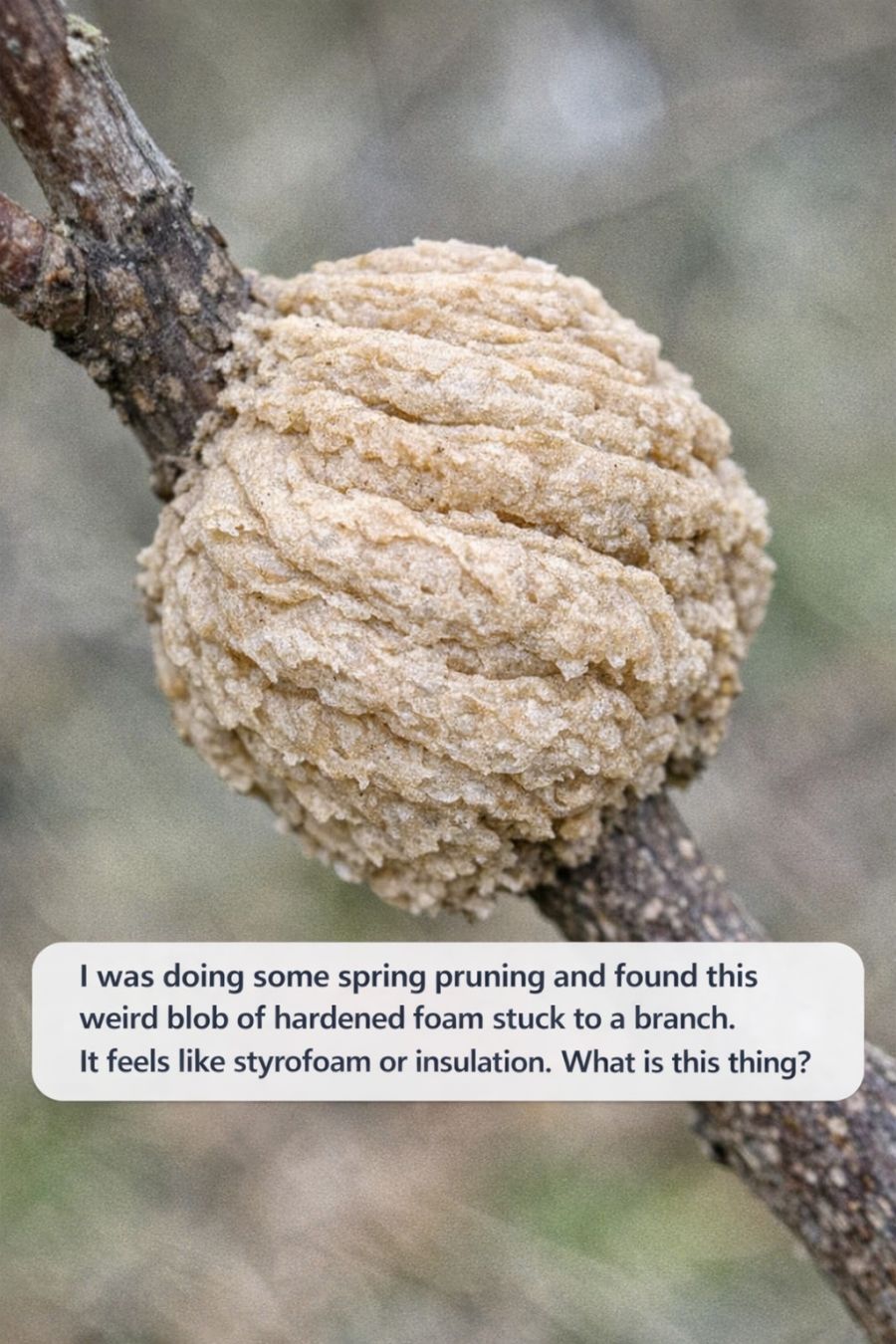
6. What’s Inside: Hundreds of Baby Mantises Waiting for Spring
Inside the protective ootheca, hundreds of mantis eggs lie dormant, waiting for the right conditions to hatch. Each ootheca can contain anywhere from 100 to 300 eggs, depending on the species of mantis.
As the weather warms and spring arrives, the eggs begin to hatch. The nymphs emerge from the egg case, often appearing almost simultaneously. These young mantises are tiny replicas of their adult forms, lacking only the ability to fly, which they will develop as they mature through successive molts.
7. Is It Safe? Handling, Cutting, or Moving a Mantis Egg Case
While it may be tempting to remove or relocate a mantis egg case, it’s generally best to leave them undisturbed. The ootheca is designed to be highly resilient, but excessive handling or movement can disrupt the delicate balance needed for the eggs to hatch successfully.
If you must move an egg case, do so gently and ensure it remains in a similar environment to the one it was originally found in. Attach it to another branch or structure in your garden, making sure it’s secure and positioned similarly to how it was before.
8. Why You Should Keep It: Praying Mantises as Natural Pest Control
Praying mantises are beneficial insects that serve as natural pest control in gardens and agricultural settings. They are voracious predators, feeding on a wide variety of insects, including those that can damage crops and ornamental plants.
By allowing mantis egg cases to remain in your garden, you are encouraging a natural method of pest management. Once hatched, the nymphs will help control populations of aphids, caterpillars, and other garden pests, reducing the need for chemical pesticides.
9. What to Do If You Accidentally Pruned Off the Egg Case
If you accidentally cut off a branch with an attached mantis egg case, don’t panic. You can still save the eggs by carefully relocating the ootheca. Find a similar location in your garden where it can be secured to a branch or other stable surface.
Use a twist tie or soft string to gently attach the egg case to its new location, ensuring it is positioned in a way that mimics its original orientation. This will help maintain the conditions necessary for the eggs to hatch successfully come spring.
10. When the Egg Case Hatches and What You’ll See in Your Garden
As spring temperatures rise, the ootheca will begin to hatch, usually between late April and early June, depending on your climate. The exact timing can vary, but it is generally synchronized with the availability of food sources.
When the nymphs emerge, they will resemble tiny, wingless versions of adult mantises. These nymphs will disperse quickly, spreading out in search of food. Over time, they will molt several times, growing larger with each molt until they reach maturity by late summer.
11. Other Egg Masses That Can Be Confused With Praying Mantis Cases
Several other insects create egg masses that can be mistaken for praying mantis oothecae. For instance, the egg cases of some species of cockroaches can look similar but are usually smaller and darker in color.
Gypsy moth egg masses are another example. These are typically tan-colored and have a fuzzy appearance due to the hairs that cover them. Unlike the smooth, ribbed texture of a mantis egg case, gypsy moth eggs are laid in a more irregular, less structured fashion. Recognizing these differences helps ensure that you can identify and preserve the beneficial mantis egg cases in your garden.
