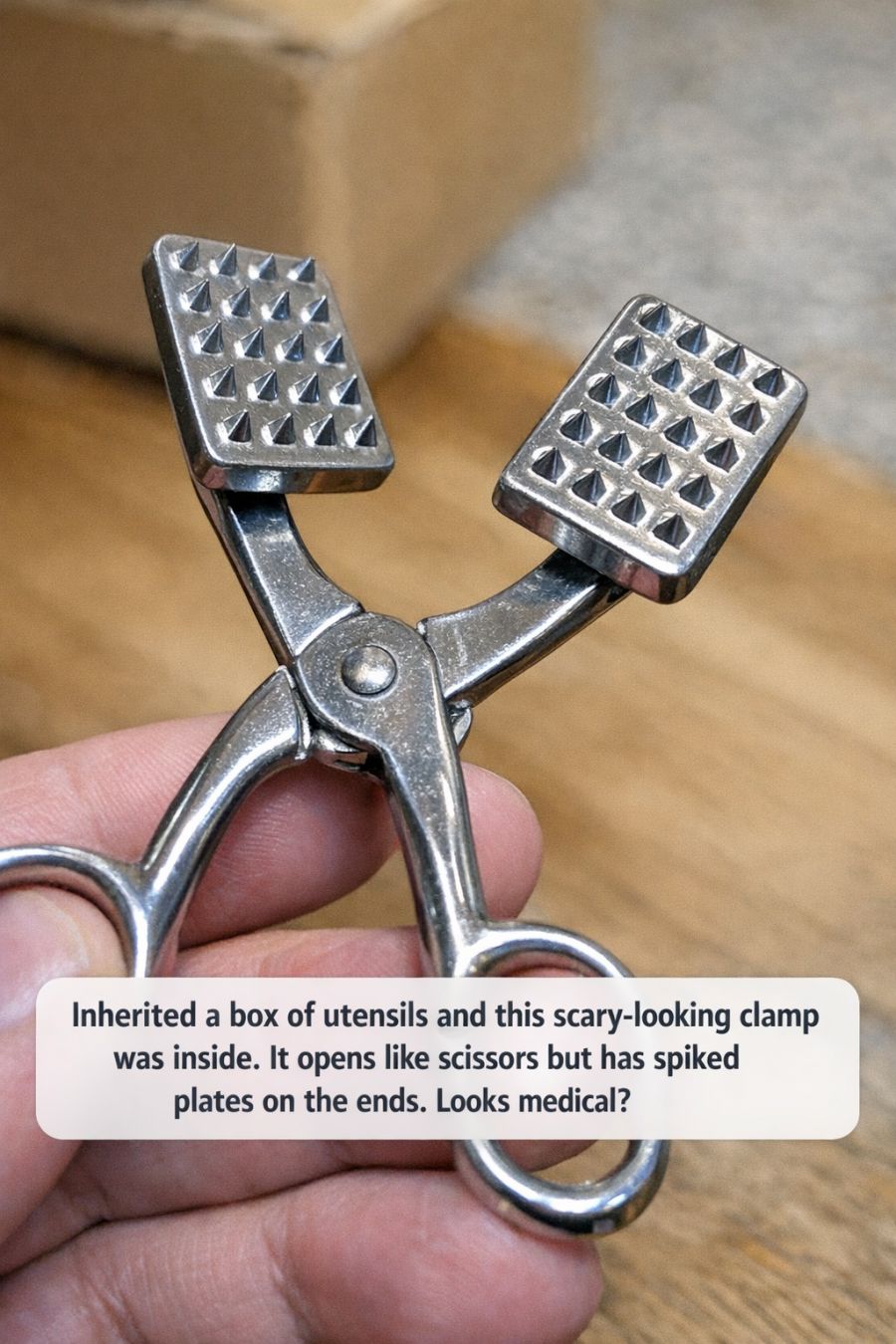
6. Spotting the Differences From Actual Medical Clamps
Distinguishing between culinary and medical clamps involves examining several key details. Medical clamps, like hemostats, are typically smaller and designed for more delicate tasks. They often feature locking mechanisms to hold tissues in place without constant pressure.
In contrast, culinary clamps like roast carving tongs are generally larger and lack the intricate locking features of medical tools. Their spiked plates are also more pronounced, designed for gripping larger, heavier items rather than delicate tissues. The materials and finishes are another giveaway, with kitchen tools often showing a more robust, utilitarian construction.
7. Materials, Markings, and Design Clues That Date Your Utensil
The materials and markings on the clamp can provide valuable clues about its age and origin. Stainless steel or cast iron were commonly used for kitchen tools in the late 19th and early 20th centuries, prized for their durability and resistance to rust.
Look for any maker’s marks or stamps, which can indicate the manufacturer and sometimes the date of production. These marks are often found near the hinge or on the handles. Additionally, the design itself, such as the style of the spiked plates or the shape of the handles, can hint at the period in which the tool was made.
8. Safety Tips: Handling, Cleaning, and Displaying Old Metalware
When handling antique utensils, it’s important to take certain precautions to ensure safety and preserve the item. Always handle the tool carefully, particularly if the spikes are sharp, to avoid injury.
Cleaning should be done gently, using mild soap and water, and avoiding harsh abrasives that could damage the metal. If the utensil is to be displayed, consider placing it in a shadow box or on a stand to protect it from dust and accidental damage. Regular inspection for signs of rust or deterioration can help maintain its condition over time.
9. Collector Value: When a Clamp-Like Utensil Is Worth Real Money
The value of antique kitchen tools can vary widely based on rarity, condition, and historical significance. Tools like roast carving tongs, especially those with unique designs or markings from a well-known maker, can be highly sought after by collectors.
If you believe your utensil may be valuable, consider having it appraised by an expert in antique kitchenware. Factors such as the tool’s provenance, any accompanying documentation, and its condition all contribute to its potential value. In the right market, these tools can fetch significant sums, particularly if they are part of a larger, complete set.
10. Other Vintage Kitchen Tools Commonly Mistaken for Medical Gear
Several vintage kitchen tools can be mistaken for medical instruments due to their unusual designs. For instance, butter curlers and sugar nippers, with their intricate and precise components, might initially appear surgical in nature.
Similarly, items like cherry pitters or grape scissors have mechanical elements that resemble those found in medical kits. The key to distinguishing these tools is understanding their specific functions in food preparation and presentation, which often involve unique mechanisms tailored to culinary tasks.
11. What to Do With Inherited Utensils You Don’t Recognize
If you inherit utensils that you don’t recognize, take the time to research and understand their purpose. Start by examining the tool for any markings or distinctive features that could provide clues about its origin and use.
Consider reaching out to antique dealers or online forums dedicated to vintage kitchenware for assistance. These communities can be invaluable resources in identifying and dating unusual items. Once identified, you can decide whether to keep the utensil as a family heirloom, display it as a conversation piece, or sell it if it holds significant value.
