
Natural fertilizing works best when you stop thinking in terms of “one perfect ingredient” and start thinking in terms of what each plant is trying to do. Leafy crops need steady nitrogen for soft green growth. Fruiting crops need balanced feeding early, then more phosphorus and potassium as they flower and set fruit. Root crops want loose soil and moderate fertility, not rich fresh manure. Almost every garden plant improves with a base of finished compost, but the best results come from small, plant-specific additions used at the right time.
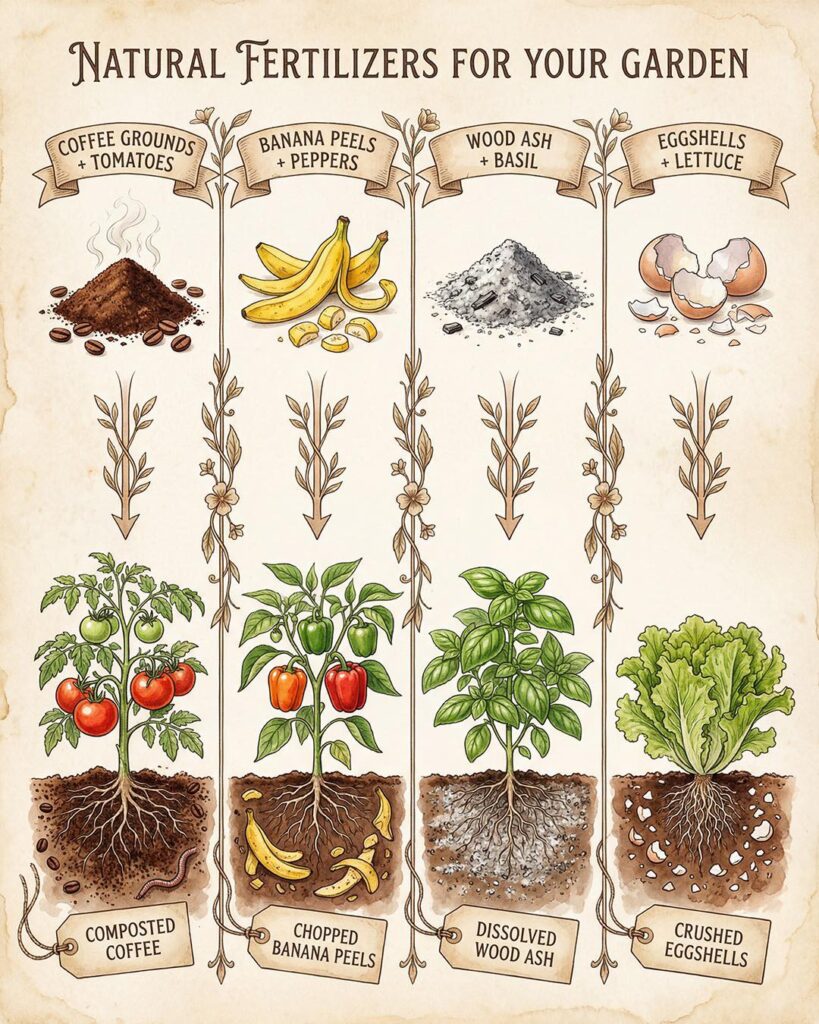
Before getting into plant-by-plant recommendations, one rule matters more than anything else: use well-rotted, finished organic material whenever possible. Fresh scraps can attract pests, create odor, or temporarily tie up nutrients in the soil. Composting kitchen and yard waste first makes nutrients gentler, safer, and easier for roots to use. Also, natural fertilizers still affect soil chemistry, especially wood ash and coffee grounds, so moderation is what makes “natural” actually helpful.
Tomatoes thrive on a strong foundation of compost and consistent moisture. They need nitrogen early to build stems and leaves, but too much later can produce big plants with fewer fruits. A great natural plan is compost in the planting hole or bed, then a side-dressing of compost once flowering begins. Composted coffee grounds can be useful in small amounts mixed into compost, but they should not be piled fresh around stems. Crushed eggshells are often added for calcium, but they break down slowly, so they work best when mixed into soil well before planting or added to compost regularly over time.
Peppers like warmth, steady feeding, and soil that is fertile but not overly rich. They benefit from compost and gentle potassium sources as they begin flowering. Chopped banana peels are commonly used because they contain potassium, but they are best composted first or chopped very finely and buried shallowly so they break down faster. A balanced approach works well: compost at planting, then a light side-dressing of compost and a little banana-peel compost or diluted compost tea during flowering and fruit set.
Lettuce grows quickly and mostly needs nitrogen for leaf production, along with even moisture. Finished compost is the safest and most reliable natural fertilizer for lettuce. Crushed eggshells can be scattered lightly to add some calcium over time and may help reduce slug activity when used dry around plants, though they are not a quick nutrient source. Avoid heavy wood ash for lettuce unless your soil is acidic and you are using only a small amount, because ash raises pH and can be too strong for tender greens.
Basil responds well to fertile, well-drained soil and gentle feeding. Too much fertilizer can make basil grow fast but reduce flavor intensity, so a moderate compost-based program is ideal. If using wood ash, only use a very small amount diluted into compost or soil, because basil appreciates potassium but does not need a strong alkaline push. A light layer of compost around the plant every few weeks usually gives better results than frequent “booster” feeds.
Cucumbers are heavy feeders that need nitrogen early and more potassium as vines begin producing. Compost and aged manure are excellent base amendments, and a side-dressing of compost once vines start running helps keep plants productive. Banana-peel compost can support flowering and fruiting, but fresh peels should not be left on the surface. Cucumbers also love moisture, so organic mulches like straw or shredded leaves do double duty by feeding soil life and reducing water stress.
Zucchini and summer squash grow fast and take a lot out of the soil. They perform best with rich compost mixed deeply into the bed before planting. Once plants begin flowering, a second feeding of compost or worm castings helps maintain fruit production. If leaves are lush but fruiting is poor, avoid adding more nitrogen and use a compost-based feed richer in potassium instead. Squash plants are vigorous, but they still suffer when soil is constantly soggy, so fertility and drainage need to be balanced.
Pumpkins and winter squash are among the hungriest garden crops. They benefit from mounded planting areas enriched with plenty of compost, aged manure, and shredded leaves that have broken down. These plants love biologically active soil, so homemade compost is often better than any single “special” ingredient. During flowering and fruit fill, a side-dressing of compost and a light potassium boost from banana-peel compost can support larger, healthier fruit without overdoing nitrogen.
Beans are different from many garden vegetables because they can work with soil bacteria to make use of nitrogen. For that reason, they usually do not need heavy nitrogen feeding, and rich manure can actually cause too much leaf growth and fewer pods. Beans prefer moderate fertility: compost, good drainage, and a bit of wood ash only if your soil is acidic and needs potassium. Keep the feeding gentle, and the plants often perform better than in heavily amended beds.
Peas have similar needs to beans: loose soil, moderate fertility, and not too much nitrogen. Compost is usually enough for a healthy pea crop. If your soil is poor, a small amount of well-finished compost tea or worm castings can help seedlings establish. Avoid strong ash or fresh kitchen scraps near roots, because peas prefer stable conditions and can struggle in soil that swings sharply in pH or moisture.
Carrots prefer soil that is loose, deep, and not overly rich. Fresh manure and heavy nitrogen can cause forked roots and lots of top growth with poor root development. The best natural fertilizer for carrots is finished compost incorporated lightly and evenly before planting, not in big pockets. Wood ash can provide potassium, which roots use, but only in modest amounts and only if your soil is not already alkaline. For carrots, soil texture matters just as much as fertility.
Beets and radishes grow quickly and do well in compost-enriched soil. Beets especially appreciate potassium and boron in tiny amounts, but the easiest natural approach is simply to use mature compost and avoid overfeeding. A small, diluted compost tea can help if growth is slow. Radishes need even less fertility than many crops; too much nitrogen gives leaves instead of roots. Keep their soil fertile but not “hot.”
Potatoes like organic matter, steady moisture, and a balanced nutrient supply that does not push excessive leafy growth. Compost and aged leaf mold are excellent for potato beds. Wood ash is traditionally used with potatoes because it supplies potassium, but it should be used carefully: too much ash can raise pH and may increase scab problems in some soils. Compost is the safer base, and hilling with compost-rich soil is an effective natural way to feed while protecting tubers.
Onions and garlic need fertile soil early, especially nitrogen while leaves are forming, but they should not be overfed late in the season. Compost mixed in before planting is ideal, and a light side-dressing of compost in early growth helps bulb development. Banana-peel compost can support potassium needs later, but avoid heavy fresh organic material right against bulbs. Garlic especially benefits from soil that drains well and stays biologically active through winter and spring.
Broccoli, cabbage, cauliflower, and other brassicas are hungry crops that respond well to rich, nitrogen-supporting soil. These plants need a strong compost base and often benefit from an extra feeding midseason, especially broccoli and cabbage. Composted manure, worm castings, or compost tea are good natural options. Crushed eggshells can contribute calcium slowly, which is helpful over time, but they should not be relied on as an immediate fix for nutrient deficiencies.
Kale, spinach, and Swiss chard prefer steady nitrogen and moisture, and they produce best with regular, gentle feeding. A compost-rich bed and occasional compost tea are usually enough. Coffee grounds are often mentioned for greens, but they should be composted first and used as part of a mixed organic feed, not applied thickly on the surface. These leafy crops respond more to consistency than intensity, so small feedings on a regular schedule work better than heavy applications.
Corn is a classic heavy feeder and needs more nitrogen than most home garden vegetables. It does best in deeply amended soil with lots of compost and aged manure before planting. Once plants are knee-high, a side-dressing of compost or composted manure gives them the push they need before ear formation. Corn also likes warm soil and strong root growth, so mulch and moisture management are as important as nutrients.
Strawberries prefer soil rich in organic matter but not overloaded with nitrogen, which can reduce fruit quality and increase soft growth. Compost is the best natural fertilizer for strawberries, especially when added before planting and as a thin top-dressing after harvest. Banana-peel compost can support flowering and fruiting because of its potassium content, but use it lightly. Strawberries also benefit from mulches like straw, which protect fruit, conserve moisture, and slowly feed the soil.
Blueberries are a special case because they need acidic soil. Many common “natural fertilizer” ideas, especially wood ash, work against blueberry health by raising pH. Blueberries do best with acidic organic matter such as pine needles, pine bark fines, and leaf mold, along with compost made from suitable materials. Coffee grounds can be used in small composted amounts, but they are not a magic acidifier. The main goal is to preserve acidity while feeding gently.
Raspberries and blackberries like deep organic soil and regular feeding, especially in spring when new canes are growing. Compost and aged manure are excellent, and a mulch of shredded leaves or straw helps keep roots cool and active. These plants benefit from annual top-dressing more than frequent spot-feeding. Avoid piling fresh scraps at the crown, which can attract pests and create rot problems.
Melons need warm soil, steady moisture, and rich fertility similar to cucumbers and squash. Start with plenty of compost, then feed again as vines spread and flowers appear. Too much nitrogen gives big vines and fewer sweet fruits, so shift toward compost-based potassium sources during fruiting. Mulching around melons is especially useful because it keeps soil moisture even, which helps fruit quality and reduces cracking.
Apple and pear trees (dwarf or backyard trees) need slower, long-term feeding rather than quick boosts. A ring of compost around the drip line in spring is one of the best natural fertilizers for young and mature trees. Keep compost away from the trunk itself, and cover the root zone with wood chips or leaf mulch to improve soil life. If growth is very weak, a small amount of aged manure can help, but excessive nitrogen can reduce flowering and fruit set.
Citrus in warm climates or containers need more frequent feeding than many fruit plants because they grow and fruit over long periods. Compost and worm castings are useful, but container citrus especially benefits from small, repeated applications instead of heavy doses. Crushed eggshells can contribute calcium slowly in potting mixes, but they are not a complete fertilizer. For citrus, the best natural program is a mix of compost, compost tea, and careful watering so nutrients stay available without waterlogging roots.
The best natural fertilizer system for a home garden is not built around one ingredient from the kitchen. It is built around compost as the foundation, mulch to protect and feed the soil, and targeted extras used with restraint. Coffee grounds, banana peels, wood ash, and eggshells can all be useful, but each one works best when matched to the right crop and used in the right amount. When you feed the soil first and the plant second, most vegetables and fruits reward you with healthier growth, better flavor, and a more productive garden season.
