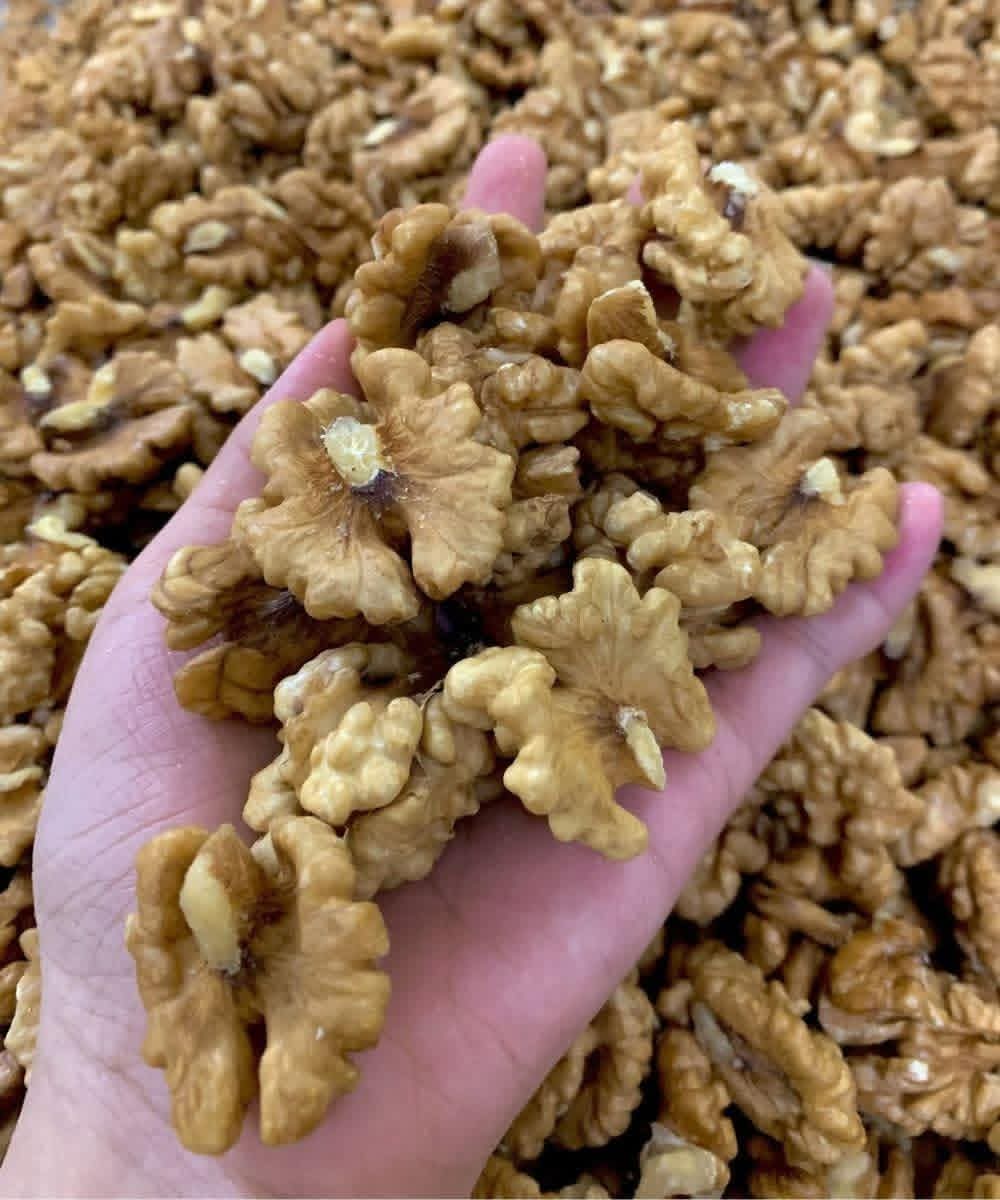
3. Feeds a Healthy Gut Microbiome
Walnut skins are rich in tannins and polyphenols — compounds most people don’t digest directly… but your gut bacteria love.
Research shows:
- Daily walnut consumption increases beneficial bacteria like Lactobacillus and Bifidobacterium
- Reduces gut inflammation
- May improve gut barrier integrity (helpful for leaky gut concerns)
🍽️ A healthy microbiome supports immunity, mood, and metabolism — making walnuts a true whole-body food.
4. May Help Manage Weight & Appetite
Despite being calorie-dense, walnuts don’t lead to weight gain when eaten in moderation.
Why?
- High fiber and protein promote fullness
- Chewing whole nuts slows eating pace
- Some calories remain trapped in cell walls — not fully absorbed
📊 One large study found women who ate nuts (especially walnuts) gained less weight over time than those who didn’t.
✅ Ideal portion: 1 oz per day — about 14 halves.
5. Supports Blood Sugar Balance
For people managing insulin resistance or type 2 diabetes:
- Walnuts improve insulin sensitivity
- Reduce post-meal glucose spikes
- Help maintain HbA1c levels
🥗 Pair with complex carbs (like oats or fruit) for stable energy.
🍽️ How to Eat Walnuts Safely & Effectively
Best Ways to Enjoy:
| Method | Tip |
|---|---|
| ✅ Raw or lightly toasted | Preserves delicate oils |
| ✅ On oatmeal or yogurt | Adds crunch and nutrition |
| ✅ In salads | Great with apples, beets, goat cheese |
| ✅ Baked into muffins or breads | Replace eggs with ground walnuts (binding effect) |
| ✅ As walnut butter | Choose unsweetened versions |
⚠️ Store in the fridge or freezer — their high polyunsaturated fat makes them prone to rancidity.
