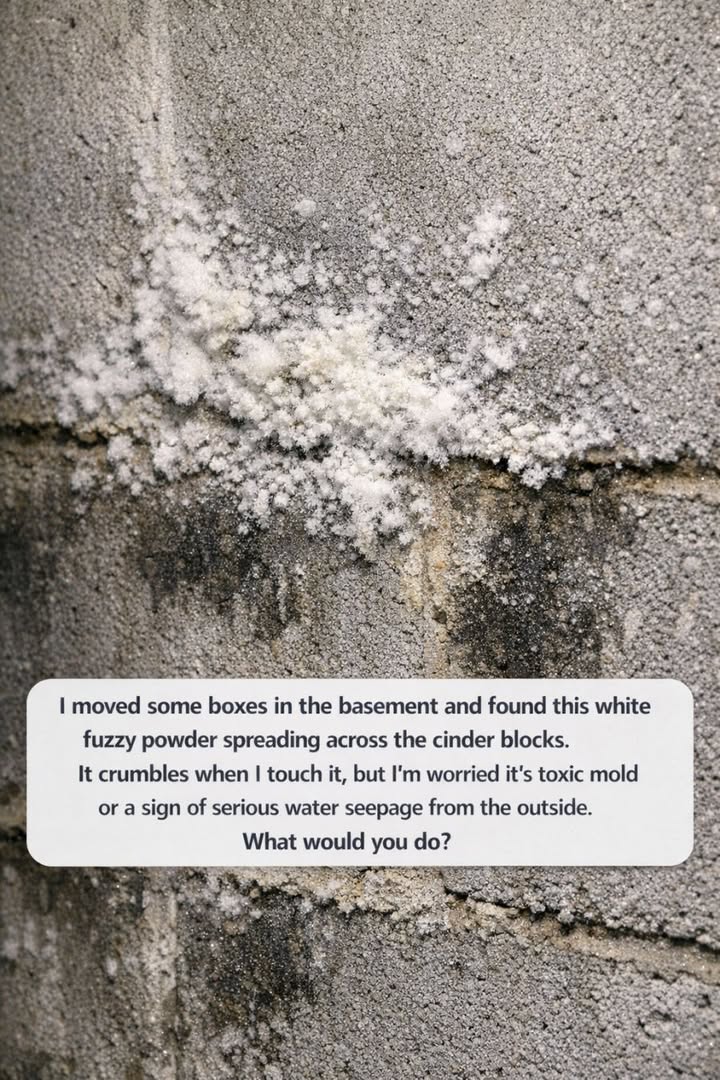
Discovering an unfamiliar substance in your basement can be alarming, especially when it’s a white, fuzzy powder spreading across your cinder block walls. Initial thoughts might lead you to worry about toxic mold or potential water damage, both of which could signal serious issues for your home.
Before jumping to conclusions, it’s important to understand what this substance might be. There are several possibilities, some more concerning than others. In this article, we’ll explore what this white powder could be, how to identify it, and what steps to take next to ensure your home’s safety and integrity.
1. Start By Staying Calm: Why That White Fuzz Probably Isn’t Toxic Mold
When faced with an unknown substance in your basement, it’s natural to fear the worst. However, the white powder you’re seeing is likely not toxic mold. Mold tends to be darker in color and appears as spots rather than a continuous layer of powder. The substance you’re dealing with is more likely efflorescence, a mineral deposit left behind by evaporating water.
Efflorescence usually appears as a white or greyish powder and is water-soluble, meaning it can be wiped or washed away. Mold, on the other hand, is organic and requires a different approach for removal. Understanding the difference can help prevent unnecessary panic and guide you toward the right solution.
2. Efflorescence 101: What That Crumbly White Powder on Cinder Blocks Really Is
Efflorescence is a common phenomenon that occurs when water seeps through concrete, brick, or stone and dissolves soluble salts. As the water evaporates, these salts are left behind as a white, powdery residue. This is often seen on cinder block walls in basements due to the porous nature of the material.
The presence of efflorescence indicates that moisture is passing through your walls, but it doesn’t necessarily mean there’s a severe problem. It’s a sign of water movement and can occur in both new and old constructions. Regular monitoring and maintenance can help manage this issue effectively.
3. How To Tell Efflorescence From Mold, Mildew, and Other Basement Nightmares
Distinguishing efflorescence from mold or mildew involves a few simple tests. Efflorescence will dissolve in water and has a chalky texture, whereas mold will not dissolve and may smear when dampened. Mold is also likely to have a musty odor, whereas efflorescence is odorless.
Visual inspection can also help; mold typically appears as dark spots or patches, often green or black, while efflorescence is usually white or light-colored. If in doubt, consider using a moisture meter to check the humidity levels of your basement, as mold thrives in high-humidity environments.
4. Check for Moisture Sources: Is This Harmless Staining or a Water Seepage Warning?
Efflorescence indicates that water is entering your basement walls, so identifying the source of moisture is crucial. Start by inspecting your basement for leaks, condensation, or any signs of standing water. Check the seals around windows, doors, and any basement egress points.
It’s also important to assess the humidity levels in your basement. Humidity over 60% can contribute to condensation and moisture issues. Using a dehumidifier can help control the indoor climate and reduce the potential for efflorescence and mold growth.
5. Inspect Outside: Grading, Gutters, and Downspouts That May Be Feeding the Problem
Exterior factors often contribute to basement moisture issues. Ensure that the ground around your home slopes away from the foundation to prevent water pooling near the walls. Improper grading can lead to significant water intrusion problems.
Check your gutters and downspouts to ensure they are clear of debris and functioning properly. Downspouts should extend at least 6 feet away from the house to direct water away from the foundation. Addressing these factors can significantly reduce the amount of moisture reaching your basement walls.
6. Simple Tests You Can Do Today Before Calling in a Pro
Before calling a professional, conduct a few simple tests to better understand the situation. Tape a piece of aluminum foil to the wall and leave it for a few days. If moisture forms on the outside, humidity is the issue; if it’s on the wall side, water is seeping through.
Use a moisture meter to check the moisture content of the walls. Levels above 20% can indicate water intrusion, which may require professional assessment. These tests can help you determine whether the problem is serious enough to warrant expert intervention.
7. Safe Cleanup: How To Remove Efflorescence Without Spreading Dust Everywhere
To clean efflorescence, start with a dry brush or vacuum to remove loose powder. Avoid using water initially, as this can dissolve the salts and spread them further. Once the surface is clean, dampen a cloth in a solution of water and vinegar (1:1 ratio) and gently wipe the area.
Wear a mask and gloves to protect yourself from dust. Ventilate the area well during cleaning to prevent inhalation of fine particles. Proper cleanup not only improves aesthetics but also prevents the reformation of efflorescence by addressing the underlying moisture issues.
8. When You Need a Contractor: Cracks, Bowed Walls, and Other Red Flags
If your basement walls exhibit significant cracks, bowing, or other structural issues, it’s time to call a professional. These symptoms may indicate serious foundation problems that could compromise the structural integrity of your home.
Consult a foundation specialist or structural engineer to assess the damage. They can recommend solutions such as wall anchors, reinforcing beams, or underpinning to stabilize your foundation and prevent further deterioration.
9. Long-Term Fixes: Drainage, Sealers, and Dehumidifiers That Actually Work
Long-term solutions for preventing efflorescence and moisture problems include improving drainage around your home. Installing French drains, sump pumps, or exterior waterproofing membranes can be effective measures.
Consider applying a high-quality masonry sealer to your basement walls to prevent moisture infiltration. Regular use of a dehumidifier can also help maintain optimal humidity levels, reducing the risk of efflorescence and mold growth over time.
10. When It Might Be Mold After All—and What To Do Next
If the white powder turns out to be mold, it’s important to address it promptly. Mold can pose health risks, especially to those with allergies or respiratory conditions. Begin by identifying and fixing the moisture source to prevent further growth.
Consult a professional mold remediation service to handle significant infestations. They have the expertise and equipment to safely remove mold and restore the affected areas. DIY solutions may suffice for minor mold, but professional guidance is recommended for larger issues.
11. How To Keep Basement Walls Dry So the White Powder Doesn’t Come Back
To prevent efflorescence from returning, maintain effective moisture control in your basement. Regularly check for leaks or water intrusion points and repair them promptly. Ensure that your home’s exterior drainage systems are functioning well.
Keep humidity levels in check by using dehumidifiers and ensuring proper ventilation. Consider installing a vapor barrier or insulating your basement walls to reduce condensation. Regular maintenance and vigilance are key to keeping your basement dry and efflorescence-free.
